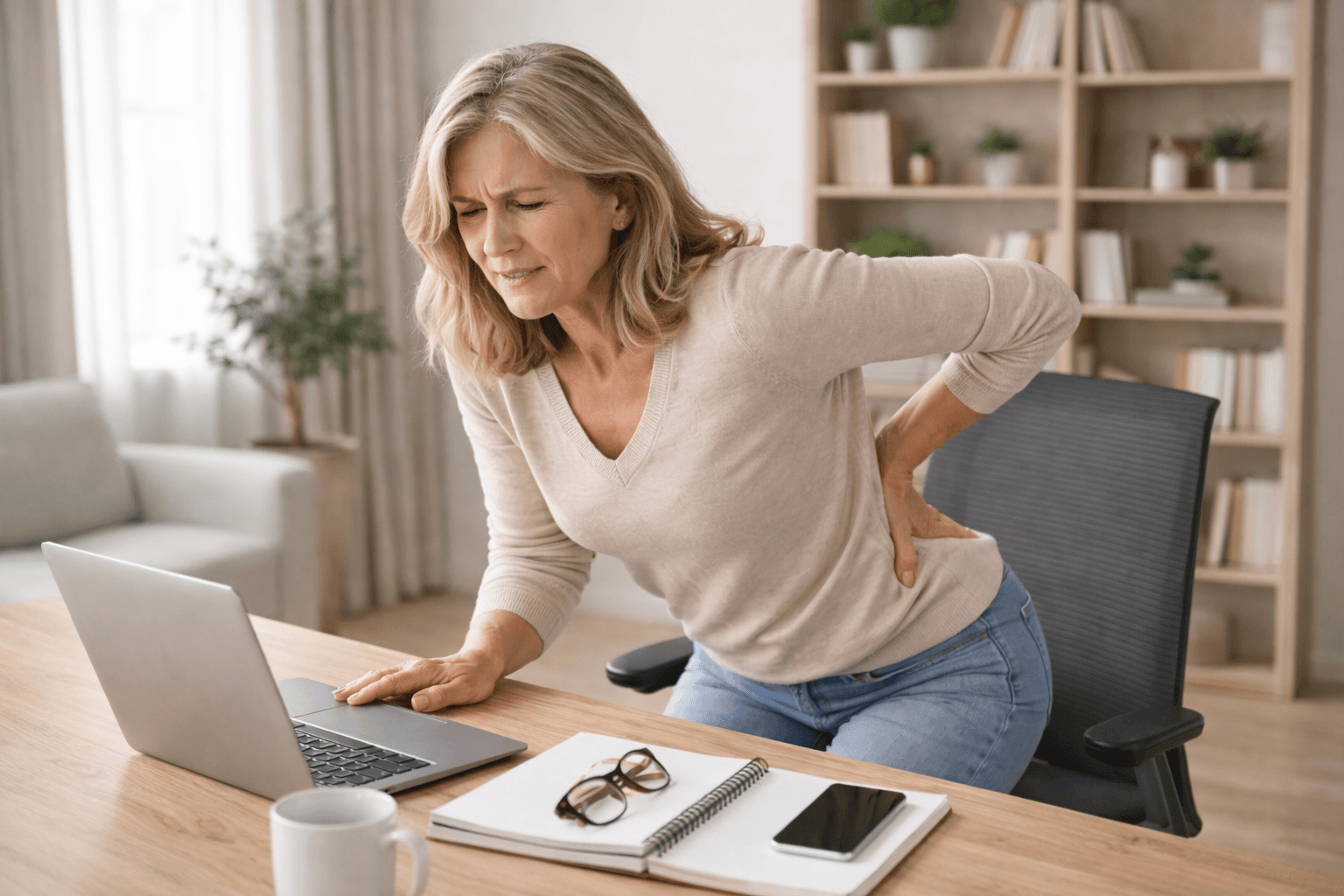
Muscle and joint pain during menopause: what’s happening and what can you do?
For many working women, menopause is not a sudden moment but a phase in which the body gradually adapts. In addition to well-known symptoms such as hot flashes and fatigue, muscle and joint pain are also very common. This can impact your daily functioning and enjoyment of work.
What causes these symptoms?
The core lies in hormonal changes, particularly the decline in estrogen. This hormone plays an important role in keeping joints flexible and regulating inflammatory processes in the body. When estrogen levels drop:
Joint lubrication decreases, causing stiffness
Muscles may feel fatigued and sore more quickly
The body becomes more sensitive to minor inflammation
Recovery after exertion takes longer
In addition, other factors such as poorer sleep quality, stress, and a decrease in muscle mass also play a role. These factors can reinforce each other.
How do you recognize it?
Common signs include:
Stiffness when getting up (especially in hands, knees, and hips)
Persistent or sharp muscle pain without a clear cause
Reduced flexibility
Increased discomfort after physical activity
What can you do about it?
There isn’t a single solution, but rather a smart combination of lifestyle, recovery, and, if needed, medical support.
Keep moving, but be mindful
Regular, moderate exercise (such as walking, cycling, or yoga) helps keep joints flexible and strengthens muscles. However, overexertion can have the opposite effect. Focus on consistency, not intensity.
Invest in muscle strength
Strength training (2–3 times per week) helps maintain muscle mass and supports joints. This is not a “nice-to-have,” but a strategic investment in your resilience.
Optimize recovery
Sleep is often underestimated. Poor sleep increases pain sensitivity. Create a consistent sleep routine and minimize evening stimuli.
Pay attention to nutrition
An anti-inflammatory diet can help reduce symptoms. Think of:
Fatty fish (omega-3)
Vegetables and fruits (antioxidants)
Nuts and seeds
Limit sugar and highly processed foods, which can trigger inflammation.
Consider supplements or support
Some women benefit from magnesium or vitamin D, especially in case of deficiencies.
Discuss it at work
This is often overlooked but essential. Temporary adjustments in workload, ergonomics, or working hours can make a big difference. Sustainable employability starts with openness.
When should you see a doctor?
If the pain persists, worsens, or is accompanied by swelling, redness, or loss of function, it is wise to rule out medical causes such as rheumatic conditions.
Final note
Muscle and joint pain during menopause is not a sign of “decline,” but of change. With the right strategy, you can manage symptoms and even come out stronger. See it as a recalibration of how you work with your body—not as a limitation, but as a new form of control.
Explore More Articles
Discover more insights on workplace wellness and employee vitality.
View All Articles